
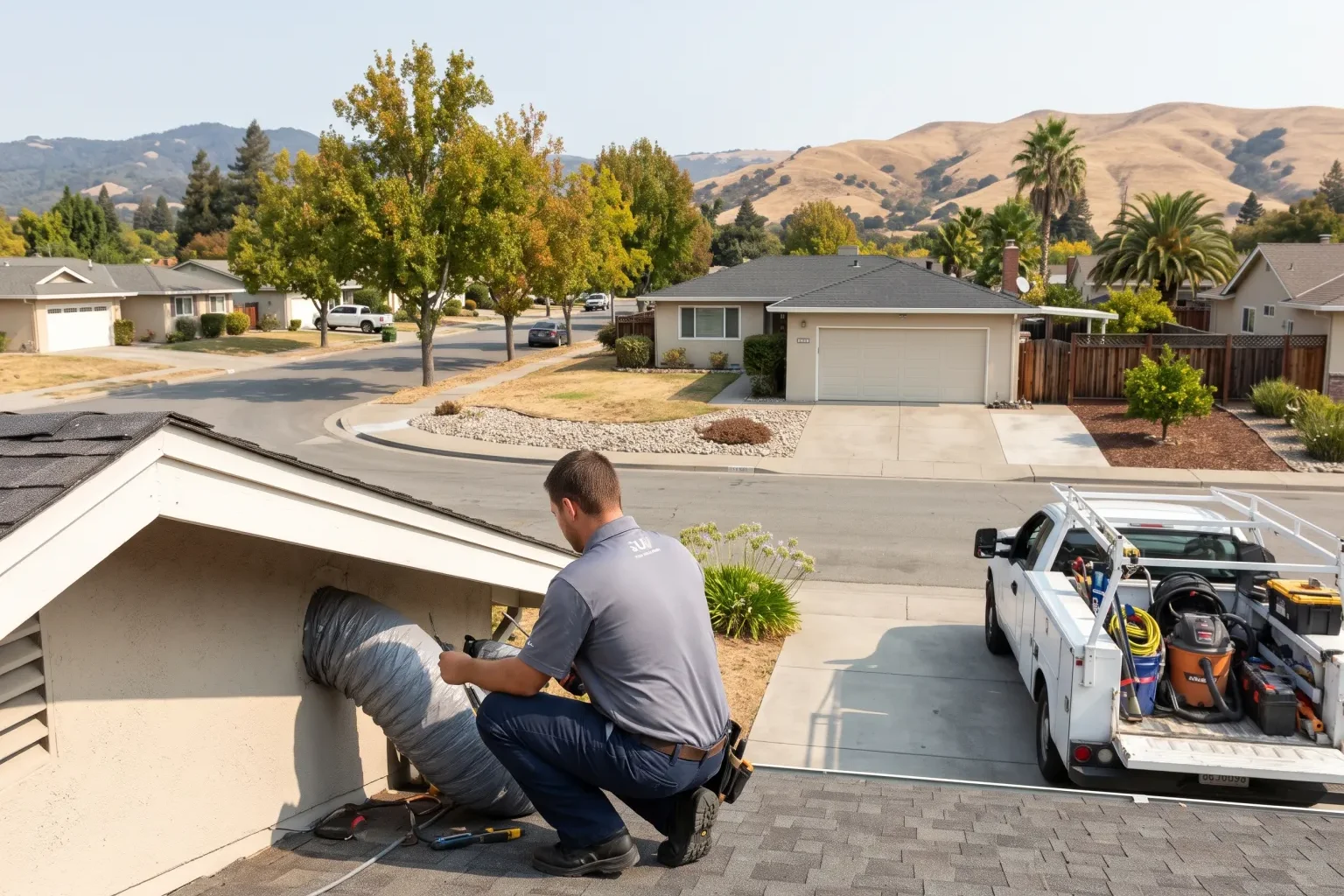
The short answer
Duct cleaning is worth doing when there's a clear reason, such as visible debris, pests, remodeling dust, or a musty smell. We inspect first, then recommend cleaning, targeted repairs, or replacement based on what your ducts actually need.
Your ductwork carries all the air your furnace, heat pump, or air conditioner moves through the house. When ducts collect heavy dust, debris, or pests, or leak into the attic or crawlspace, you can end up with dusty rooms, weak airflow, and a system that works harder than it should. ChillPro AC Repair cleans and inspects duct systems for homeowners in San Jose and nearby cities. We also tell you plainly when cleaning won't fix the problem, because sometimes the real issue is a torn duct, a crushed run, or a disconnected joint rather than dirt.
Signs Your Ducts May Need Cleaning
Most homes don't need duct cleaning on a fixed schedule. It makes sense when there's a specific reason. These are the signs we look for:
Some of these symptoms, especially weak airflow and uneven room temperatures, can come from leaky ducts or a clogged filter rather than dirty ducts. That's why we inspect before we recommend cleaning.
- Dust puffs out of supply registers when the system starts, or dust settles on furniture soon after you clean
- Visible debris, pet hair, or buildup on register grilles and inside the first few feet of duct
- A musty smell when the heat or air conditioning runs
- Signs of rodents or insects, such as droppings, nesting material, or chewed duct jackets
- Construction dust in the system, especially after drywall sanding or floor refinishing
- A recent move into a home where you don't know when the ducts were last checked
- Rooms that get noticeably weaker airflow than they used to
What We Check During a Duct Inspection
A good duct visit starts with looking, not vacuuming. Here's what we check:
Where it helps, we use a camera to see farther into runs we can't reach by hand. We show you photos of what we find so you can see the condition of your ducts for yourself.
- The air filter and filter rack, including whether the filter fits snugly so air isn't slipping around it
- The blower, coil area, and return plenum, where dust tends to collect first
- Supply and return registers and the duct sections behind them
- Duct runs in the attic, crawlspace, or garage for tears, crushed sections, sagging flex duct, and loose or disconnected joints
- Insulation on ducts that pass through hot attics or other unconditioned spaces
- Signs of moisture, condensation, or mold-like growth
- Signs of pest entry or damage
Cleaning, Repair, or Replacement
Once we know what's going on, there are usually three paths.
Cleaning makes sense when the ducts are structurally sound but dirty. We use negative-pressure vacuum equipment and agitation tools to loosen and remove debris from supply and return runs, then clean the registers and grilles.
Repair makes sense when most of the system is in good shape but specific sections have problems. That can mean resealing leaky joints, reattaching a disconnected run, replacing a crushed or torn length of flex duct, re-supporting sagging duct, or adding insulation where it's missing.
Replacement is worth discussing when ducts are old, brittle, widely damaged, heavily contaminated by pests, or poorly sized for the equipment. Flex duct that's cracking or falling apart often can't be cleaned well, because cleaning tools can tear it further. If you're planning a new heat pump or air conditioner, it's also a good time to look at the ducts, since new equipment may need different duct sizing to deliver the airflow it's designed for.
We explain the trade-offs of each option for your house and let you decide. If cleaning alone won't solve the problem you called about, we'll say so.
What Affects the Cost
Every home is different, so we quote after we've seen the system. These are the main things that affect the cost:
We walk you through the quote before any work starts, so you know what's included and why.
- The size of the home and the number of supply and return registers
- How many heating and cooling systems the house has
- Where the ducts run and how easy they are to reach. Tight crawlspaces and low attics take more time
- How much debris is present, and whether pest contamination needs extra cleanup
- Duct material and condition, since fragile flex duct needs a different approach than sheet metal
- Whether repairs, sealing, or insulation are needed along with cleaning
- Whether the job includes cleaning the blower or coil
How a Duct Cleaning Visit Works
When you schedule, we ask a few questions about what you're noticing, how old your system is, and where the ducts run. That helps us bring the right equipment.
On the day of the visit, the technician starts with an inspection and talks through the findings with you. If cleaning is the right call, we cover floors and furniture near the registers. Then we seal off the registers so loosened debris gets pulled toward the vacuum instead of into your rooms, and we work through the system section by section. At the end, we replace the filter or recommend a replacement, then run the system and check airflow at the registers.
If we find damage that needs repair, we show you before going further. Smaller fixes can often be handled during the same visit. Larger repairs or replacement are scheduled separately. How long cleaning takes depends on the size of the house and how easy the ducts are to reach, and we'll give you an estimate when you book.
Keeping Ducts Cleaner Between Visits
Most dust enters ductwork through the return side, so your filter does most of the work of keeping ducts clean.
The Santa Clara Valley has dry summers, and inland and southern parts of the valley run noticeably hotter than areas near the Bay. Filters load up faster in dry, dusty months, and attic ducts work hard in the heat. Summer is a good time to check your filter often and look over any duct runs you can see in the attic.
- Check the filter monthly during heavy-use months and replace it when it looks dirty
- Use a filter that fits the rack properly, because gaps let dust get around it
- Cover registers during remodeling and run the system as little as possible until cleanup is done
- Keep return grilles clear of furniture, rugs, and stored items