The short answer
A good AC installation in Mountain View starts with sizing the system to your specific house, not to its square footage alone. Many homeowners here should also compare a heat pump with a standard AC, since a heat pump can cool in summer and heat in winter while setting you up for future Bay Area furnace rules.
If your Mountain View home has never had air conditioning, or the system you have is near the end of its life, a new installation is a chance to get the details right: the size of the equipment, the type of system, and how it fits your ducts and electrical service. ChillPro AC Repair installs central air conditioners, heat pumps, and ductless systems in homes across the 94040, 94041, and 94043 ZIP codes. We're based in San Jose, about 9 miles southeast, and we also serve nearby Los Altos, Sunnyvale, Los Altos Hills, Cupertino, and Santa Clara.
Sizing a system for Mountain View's climate
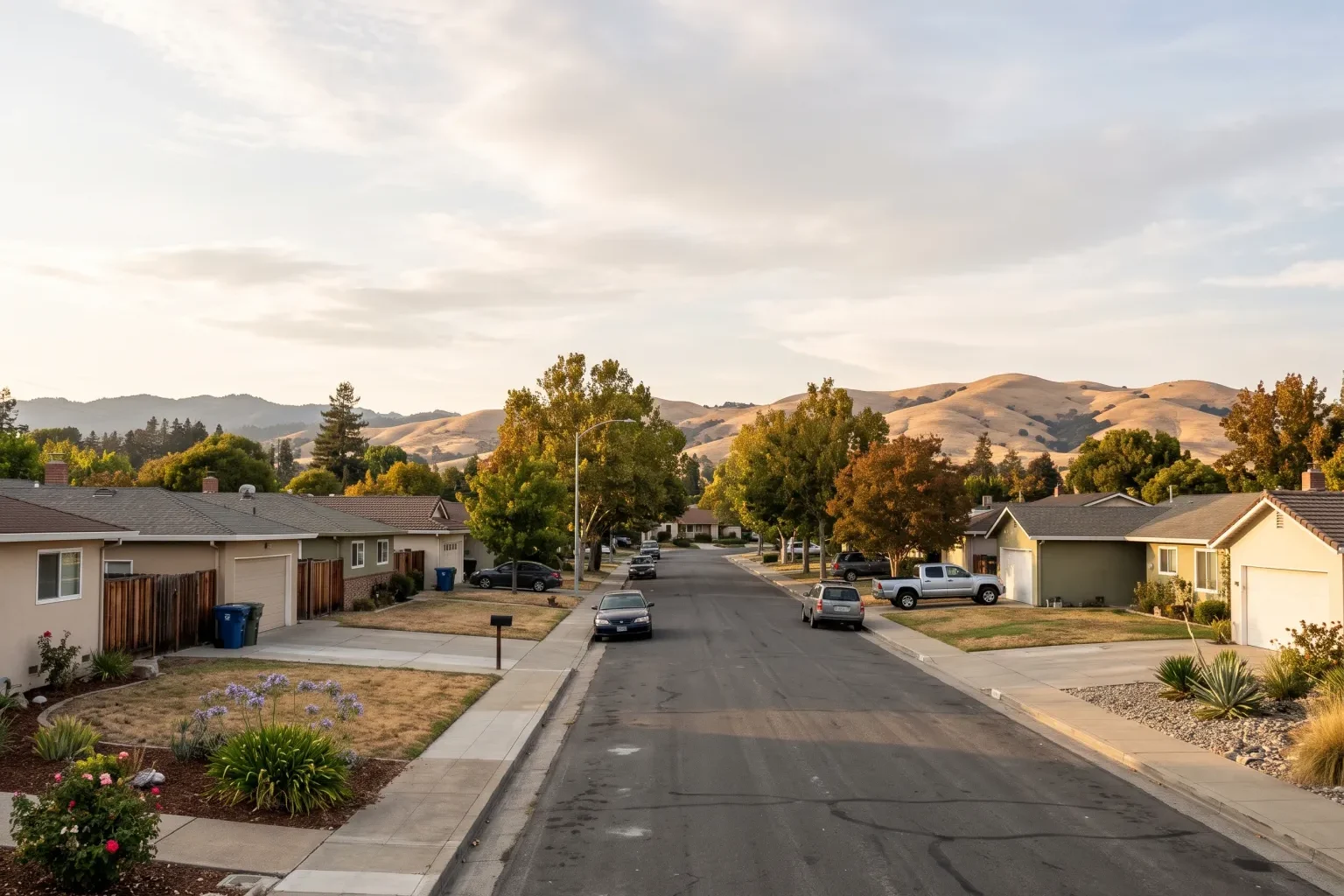
The Santa Clara Valley has dry summers and mild, damp winters, and areas closer to the Bay, including Mountain View, usually run cooler in summer than the hotter inland and southern parts of the valley. That matters when choosing equipment. A unit sized for the hottest corner of the valley may be more than a Mountain View home needs.
An oversized air conditioner cools the house quickly, then shuts off before it runs long enough to circulate air evenly. The result is rooms that feel stuffy or uneven, more on-off cycling, and extra wear on the equipment. An undersized unit runs constantly on the warmest afternoons and still falls behind. We base our recommendation on a load calculation for your house rather than a rule of thumb.
- Insulation levels in the attic and walls
- Window size, type, and which direction they face
- Shading from trees and neighboring buildings
- Ceiling height and the layout of rooms
- Where the ductwork runs and its condition
Central AC or heat pump: the main decision
Many Mountain View homes are heated by a gas furnace. When you add cooling, you can pair a traditional air conditioner with that furnace, or install a heat pump that handles both cooling and heating. A heat pump looks and installs much like a central AC, but it can also run in reverse to warm the house during the valley's mild winters.
Bay Area Air District rules are part of this conversation. Under Rule 9-4, natural gas furnaces manufactured from 2029 must meet a zero-NOx emission standard, which in practice points homeowners toward heat pumps when a furnace is replaced after that date. These rules do not require you to replace working equipment; they apply only when an existing furnace fails or is replaced. If your furnace is still in good shape, a standard AC can make sense. If it's aging, it may be worth planning for a heat pump now so you aren't making two separate decisions a few years apart.
Fitting the system to your house
Before installing anything, we check what the new equipment will connect to. Existing ductwork may have leaks, crushed sections, or runs that are too small for the airflow a cooling system needs. Fixing those issues during installation is usually easier than chasing comfort problems afterward.
We also look at your electrical panel to confirm it can support the new outdoor unit, and we talk through where that unit will sit so it has clearance for airflow and service access. For homes without ducts, or for an addition or converted garage that the main system doesn't reach, a ductless mini-split can cool individual rooms without new ductwork.
Incentives and tax credits right now
The federal Energy Efficient Home Improvement Credit (25C) covered qualifying heat pumps placed in service before December 31, 2025. It is not available for new installations after that date, so don't count on it when budgeting for a project now.
Bay Area homeowners can still check BayREN and their local clean energy provider for heat pump and electrification incentives. Amounts and availability change with each funding cycle, so we confirm the current offer before including it in a quote.
What to expect from an installation
Here is how a typical project with us goes, from first visit to a running system.
- An in-home visit to measure, inspect ducts and electrical, and discuss how you use each room
- A written recommendation explaining the system type and size, and why
- Removal of old equipment, if any, and installation of the new indoor and outdoor components
- Testing airflow, refrigerant charge, and thermostat operation before we leave
- A walkthrough of thermostat settings and filter changes
More services in Mountain View
- AC Repair in Mountain View
- Heating Repair in Mountain View
- Heat Pump Installation in Mountain View
- Furnace Repair in Mountain View